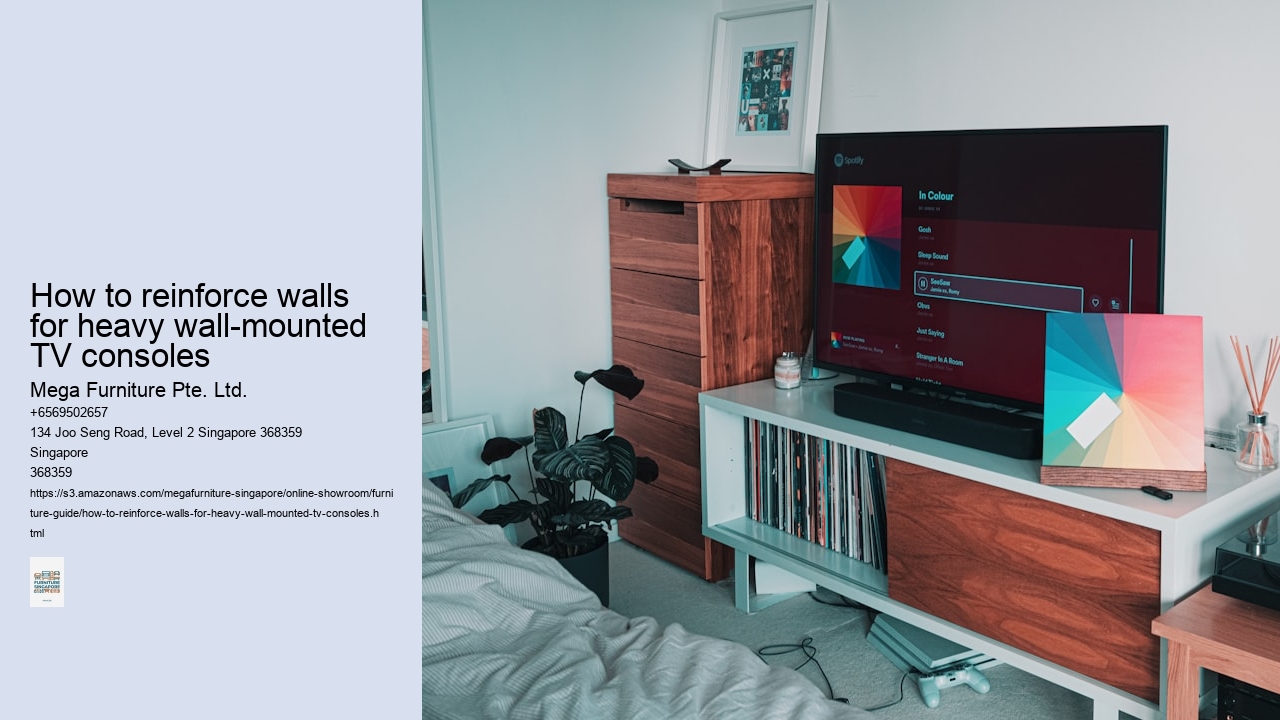
Singapore’s humidity is a silent saboteur. In a typical four-room BTO, that constant 80% moisture will find its way into the seams of a bargain console, swelling MDF shelves and warping particleboard doors until they no longer close properly. You’re not just fighting the air; condensation from an aircon unit dripping onto a wall-mounted frame or the salty coastal breeze in Marine Parade condos accelerates the process. The result is often a sagging, discoloured centrepiece that fails long before the TV it supports. For a lasting installation, start with the core materials. Solid hardwoods like rubberwood or acacia are inherently stable, while marine-grade plywood — designed for boat hulls — offers exceptional resistance to delamination. Laminated boards, such as those with a melamine or vinyl wrap, can perform well, but the critical detail is a fully sealed edge; any exposed core acts as a sponge. It’s a material choice that quietly dictates the lifespan of your investment. The hardware matters just as much. Those L-shaped brackets and mounting plates securing your console to the wall are vulnerable points. Opt for powder-coated steel or, better yet, stainless steel fasteners and brackets; they resist the corrosion that turns standard black oxide fittings into brittle, rusty failures. This is especially crucial for floating consoles, where the entire load is transferred through these hidden metal components — a failure here means more than a wobbly shelf. Consider the entire ecosystem of the living room wall. A console pushed against a shared bathroom or kitchen wall may face higher moisture exposure, and a unit in a rarely-used condo entertainment room still endures the same ambient dampness. The goal is a piece that withstands not just daily use, but the pervasive climate itself, maintaining its structure and finish through years of rainy seasons. For a curated selection of consoles built with these principles, you can browse the
TV console rangeat Megafurniture. Ultimately, it’s about specifying for the environment you actually live in, not a showroom floor. A well-constructed console in the right materials becomes a reliable backdrop, letting you forget about the weather outside.
That 240cm console you're eyeing will likely span two different wall types in a typical HDB living room — a concrete column and hollow block partition. Many homeowners assume any wall can hold weight, but mounting a fully loaded console on a non-load-bearing partition is a recipe for disaster. You'll need to locate the structural column, which is often just 60cm wide, and centre your mounting bracket over it; the rest of the unit will hang over hollow blocks requiring serious reinforcement. A stud finder is a start, but tapping for a solid sound versus a hollow one is the old-school method that still works. Ignoring this step means the entire installation's integrity is compromised from the outset.
Relying on standard plastic wall plugs for the hollow block sections is perhaps the most common and critical error. These plugs are designed for light-duty hanging, not for supporting the dynamic load of a heavy console that gets bumped or has drawers yanked open. For hollow blocks, you must use specialised metal toggle bolts or cavity anchors that spread the load behind the internal cavity. The right hardware feels over-engineered for the job, but that's precisely the point — it's what keeps your console, TV, and everything else from crashing down. Skimping here is a gamble with very expensive odds.
A console's capacity isn't just about the unit itself, but everything you put into and on top of it. In a 12 sqm space, the temptation is to treat that long, sleek surface as prime storage real estate for media players, game consoles, stacks of books, and dense decor. This creates a cumulative load that can easily exceed 80kg, stressing the mount and wall anchors at their weakest points. You have to account for the live load, not just the dead weight of the furniture. It's a classic case where the console's utility becomes its own biggest enemy if you don't plan for what it will actually hold.
Leaving cable management as an afterthought guarantees a tangled, hazardous mess that defeats the clean look of a floating console. Wires for the TV, soundbar, fibre box, and gaming consoles will dangle visibly or get stuffed into a cramped cavity, which becomes a dust trap and a fire risk. The proper fix involves installing a recessed power strip inside the console and using brush plates or internal conduits to route cables neatly through the wall or cabinet back. This isn't just about aesthetics; it's about safety and making future upgrades or repairs a nightmare. A tidy setup behind the unit is the true mark of a finished job.
Finally, there's the visual mistake of letting a 240cm console overwhelm a compact living room's proportions. When every centimetre counts, a unit that runs nearly wall-to-wall can make the space feel like a corridor, especially if it's paired with a large media wall or bulky sofa. The console should anchor the room, not dominate it — leaving a breathing space of 20 to 30cm on each side creates a much more balanced composition. It’s a spatial miscalculation you see in many BTO flats, where the furniture catalogue's dream meets the reality of a tight floor plan. Getting the scale wrong makes the whole room feel off, no matter how secure the mount is.
A 75-inch TV perched on a 120cm console looks precarious, like a giant's head on a child's shoulders — it’s not just about aesthetics; that imbalance stresses the wall mount and unsettles anyone in the 4-room BTO living-dining area. The console’s primary job is to provide visual grounding, a solid base that makes the floating screen feel anchored and intentional. For those large panels, you’ll want a console length between 180cm and 240cm; that extra span ensures the cabinet extends beyond the TV’s width on both sides, preventing a top-heavy silhouette against your feature wall.
Scale down proportionally for smaller screens. A 40 to 55-inch TV, common in many condo media rooms or compact resale flat layouts, finds its balance on a 120–160cm console. That range offers enough surface for the TV to sit centrally without crowding the edges, while still accommodating the necessary storage for media players, gaming consoles, and the inevitable cable clutter. The console should still project a few centimetres past the TV’s edges — it’s a subtle rule that maintains proportion even when you’re seated eight feet away.
This proportional sizing isn’t merely a design principle; it’s a practical one for open-concept spaces. In a typical HDB living-dining area, where the console backs onto the dining table, a correctly sized unit acts as a visual buffer, organising the room into distinct zones without closing them off. A console that’s too short makes the TV look like an isolated, dominating slab; one that’s appropriately long integrates it into the living area’s furniture landscape, making the whole arrangement feel settled and complete.
Choosing the right length often dictates the cabinet’s form. Floor-standing consoles in the 180–240cm range tend to be heavier, constructed from rubberwood or engineered timber with sintered stone tops, which adds to their anchoring presence. Floating variants, popular for a cleaner look, need to be especially robust at these lengths — their wall brackets must handle not just the console’s weight, but the psychological weight of the oversized screen above. You’ll find suitable proportions across wall-mounted, floor-standing, and floating designs, but the key is letting the TV’s dimensions dictate your search, not the other way around. Browse the options at Megafurniture’s collection to see how these scales translate into real pieces.
Ultimately, getting this proportion right solves two problems at once: it gives your TV a stable, supported appearance, and it provides a generous storage run that can organise an entire entertainment system. That extra length means you can hide routers, stash board games, and display books or ceramics without cramming — turning a functional piece into the room’s quiet anchor.
Online images don't convey mass. A console that looks substantial on screen can feel surprisingly lightweight in person—a concern when it’s meant to hold a 75-inch TV and several kilos of electronics. At Megafurniture's Joo Seng showroom, you can assess that heft directly, pressing down on a floating console to gauge its rigidity and running a hand over the finish to check for grain consistency or any subtle colour variation. It’s the difference between engineered wood that feels like plastic and solid timber with a proper, tactile veneer. You’ll also see the hardware: the thickness of mounting brackets, the quality of their powder coating, and the type of screws provided. Test the drawer glides yourself. Smooth, silent operation on full-extension runners is non-negotiable for daily use, but some mechanisms feel gritty or sag when loaded. Open and close every drawer in the display model; a slight catch or wobble here speaks volumes about long-term durability. For floating console variants, pay close attention to the joinery at the corners—are mitres tight and seamless, or is there a visible glue line? These details are often glossed over in studio photography but become focal points in a minimalist HDB living room. Discuss your specific wall type with the staff. They encounter the realities of local installations daily, from the plasterboard in newer condos to the brittle brick-and-plaster in some resale flats. They can advise on the necessary wall plugs or recommend professional installers who’ve handled their units before. It’s a practical conversation that online checkout simply can’t replicate. Ultimately, visiting lets you view the full scale and proportion in a room-like setting. A 240cm console is a major visual commitment; seeing it in person helps you judge if its bulk will overwhelm a 4-room BTO layout or if its design lines work with your existing decor. You can browse the complete
TV console rangethere, comparing the oak finishes against the walnut tones under proper lighting—something a calibrated screen still gets wrong. That final confirmation before delivery is worth the trip to Joo Seng.
The delivery team will arrive with a stack of flat-pack boxes, not a single assembled unit. That’s the reality of navigating the 90cm-wide lift lobbies and tight stairwells in most HDB blocks and older condos. For a 200cm TV console, the components are often broken down into two or three manageable packages, which means assembly is a given — you’re paying for the labour to build it in your living room, not just for delivery from the lorry. What that assembly includes, however, varies significantly. Many firms define it strictly as constructing the freestanding cabinet, attaching legs, and levelling it on your floor. The crucial task of securely mounting the entire unit to your wall — drilling into the concrete, installing proper anchors, and ensuring it’s plumb — is frequently treated as a separate, chargeable service. Don’t assume; verify the scope of work in your quotation. If your plan involves a floating design or you simply want the peace of mind that a toddler can’t pull it over, you’ll need to confirm wall-mounting is part of the deal or budget for an additional fee. The standard warranty you’ll encounter is 12 months, a typical industry baseline. Its devil is in the details. Coverage often distinguishes between structural integrity — like a fractured frame or failing mounting brackets — and surface defects, such as a chipped laminate edge or a veneer bubble. Read the fine print to understand what’s classified as a manufacturing fault versus “wear and tear.” For a wall-mounted piece holding thousands of dollars in electronics, clarity on load-bearing component coverage is non-negotiable. It’s also wise to ask about post-installation repairs. Drilling into an HDB wall for mounting can expose loose plaster or old, crumbling concrete around the anchor points. Some retailers include basic patching in their service, while others explicitly state that any wall repair or repainting is the homeowner’s responsibility — an extra cost and hassle to factor in. You can
browse Megafurniture's collectionto get a sense of current offerings, but always confirm these logistical details directly before committing. Ultimately, the smoothest installation experiences are planned backwards from these constraints. Measure your lift doors, ask the precise assembly questions upfront, and scrutinise that warranty document as closely as the product’s wood grain.
A common BTO living room dilemma: you've got a 65-inch TV, a concrete ceiling, and hollow block walls that feel about as sturdy as a cardboard box. The questions are practical, and the answers need to be just as concrete.
Can a BTO hollow wall hold a 200kg console? Yes, but you'll need to bypass the wall entirely. The proper method involves fixing heavy-duty steel toggle bolts directly into the concrete ceiling slab above; the wall-mounted unit then hangs from these, with the wall itself bearing little to no load. Get a professional installer who's familiar with HDB construction—it's not a weekend DIY job.
For walkways, a console depth of 35–40cm is the sweet spot; it provides enough surface for a soundbar and a few decor items while leaving at least 90cm of clear passage behind it. If you're mounting over a kids' play area, the concern shifts from weight to safety—ensure the unit has no sharp, protruding corners and that every drawer and door has a child-lock mechanism. A floating console, with its visible metal brackets, offers a distinct, industrial look, while a true wall-mounted design is often integrated into a full carpentry feature wall for a seamless, built-in appearance. That seamless look is popular in condo media walls, but it's a permanent commitment.
The choice often comes down to your flat's layout and your own tolerance for visible hardware. In a narrow 4-room BTO living room, that clean, flush line of a fully wall-mounted console can make the space feel noticeably wider. You can explore various profiles and mounting styles in Megafurniture's collection to see what suits your space.
The moment you pencil in that 240cm console on your floor plan, you’ve already made your first mistake. You’ll need to measure your actual wall twice, in the exact spot it’ll hang, accounting for skirting boards that can shave off 10cm and power points that dictate where the unit can’t go. There’s nothing more deflating than a console that arrives perfect for your 75-inch TV, only to end up awkwardly straddling a switch box because you trusted the BTO’s generic layout drawing.
Confirm the console’s back panel has proper cable access holes, not just a single grommet that forces all your HDMI, power, and LAN cables into one tangled knot. Many models designed for a clean look forget that a family’s media setup is a living ecosystem of game consoles, soundbars, and set-top boxes — you’ll want multiple, strategically placed cut-outs to manage the inevitable sprawl.
Then, decide on the eternal trade-off: open shelving versus closed cabinets. Open shelves gather a fine layer of dust in a week, a fact any homeowner along the East-West Line corridor knows intimately. Closed cabinets, however, are pet-proof and hide clutter, turning a toddler’s toy avalanche into a non-issue with a simple door swing. Your choice here often comes down to whether you prize daily visual calm or the occasional curated display.
This is where you must balance design aspirations with your flat’s physical constraints. That beautiful, cantilevered floating console might be your favourite, but if your HDB living room wall is lightweight partition, you’ll need serious reinforcement work before it can bear the load of a solid wood unit and a 55-inch TV. The dream of a seamless media wall often meets the reality of existing structural beams or irregular alcoves in older resale flats.
Finally, step back and consider the whole room. A console that’s proportionally perfect under your TV can still overwhelm a narrow 4-room BTO layout, making the space feel like a corridor. It’s not just about fitting the wall; it’s about letting the room breathe.
That satisfying thud when you tap a wall in your new BTO flat - it's hollow, because it's a non-structural partition. The solid, resonant knock in your parents' 1990s resale flat tells a different story: that's likely load-bearing masonry. In Singapore, your wall type dictates everything about mounting a heavy console.
Construction here follows a clear hierarchy. Condo and landed property walls are typically concrete or brick, offering robust support. HDBs are more varied. BTO partition walls are often lightweight gypsum or hollow block; they're for dividing space, not holding substantial weight. Older resale flats, especially those built before the 2000s, frequently feature solid brick or reinforced concrete load-bearing walls. A TV console anchors the wall opposite the sofa in the same way a tall bookshelf anchors a corner — long horizontal piece, mix of open and closed storage, defines the visual weight of one whole side of the room. Megafurniture's TV Console range covers floating wall-mounted designs, low-profile freestanding consoles, and modular feature-wall configurations. Most pieces sit at 40-50cm height, sized for screens up to 75 inches.. The first step isn't picking a console - it's identifying which you have.
You're not just dealing with static load, the console's own weight. A 200cm solid wood unit from Megafurniture's collection might weigh 60kg empty. That's the easy part. Dynamic load - the shifting weight when someone leans on it, or the pull-out force from a drawer packed with game consoles - is what tests the fixings. For hollow walls, you'll need specialised anchors that spread the load across the internal cavity; for solid masonry, heavy-duty bolts that bite deep into the material.
Get this wrong, and you're not just looking at a crooked TV. A failed mount can rip out a section of drywall, leaving a costly repair and a safety hazard. It's the unglamorous, essential groundwork that separates a secure media wall from a weekend disaster. Start by finding the studs with a reliable detector, or confirm masonry with a careful drill test - then you can confidently browse the options for a console that won't come crashing down.
That satisfying thud when you tap a wall in your new BTO flat — it’s hollow, because it’s a non-structural partition. The solid, resonant knock in your parents’ 1990s resale flat tells a different story: that’s likely load-bearing masonry. In Singapore, your wall type dictates everything about mounting a heavy console.
Construction here follows a clear hierarchy. Condo and landed property walls are typically concrete or brick, offering robust support. HDBs are more varied. BTO partition walls are often lightweight gypsum or hollow block; they’re for dividing space, not holding substantial weight. Older resale flats, especially those built before the 2000s, frequently feature solid brick or reinforced concrete load-bearing walls. The first step isn’t picking a console — it’s identifying which you have.
You’re not just dealing with static load, the console’s own weight. A 200cm solid wood unit from Megafurniture’s collection might weigh 60kg empty. That’s the easy part. Dynamic load — the shifting weight when someone leans on it, or the pull-out force from a drawer packed with game consoles — is what tests the fixings. For hollow walls, you’ll need specialised anchors that spread the load across the internal cavity; for solid masonry, heavy-duty bolts that bite deep into the material.
Get this wrong, and you’re not just looking at a crooked TV. A failed mount can rip out a section of drywall, leaving a costly repair and a safety hazard. It’s the unglamorous, essential groundwork that separates a secure media wall from a weekend disaster. Start by finding the studs with a reliable detector, or confirm masonry with a careful drill test — then you can confidently browse the options for a console that won’t come crashing down.